
Author: Rickie
A Wine Lover’s Weekly Guide To $10 Wines – A Peloponnesian Greek Wine
Posted onThis will be our third Greek wine review. The first was a sweet wine from the island of Samos. Then came a red from the island of Crete also made by today’s producer. Now we continue with a white from the Peloponnesian peninsula. This particular wine comes from pink Rhoditis grapes in the foothills near Patras at an elevation of about 650 to 1500 feet (200 to 450 meters). The producer Kourtaki has the largest wine production facility in all Greece, which is not surprising when you consider that it is the largest producer in the country. What may be surprising is that they are the first in Europe to use the patented “Crystal Flow” wine stabilization method. There is a lot happening in the world of wine, and Greece is no exception. By the way, should you so desire they still bottle and sell that classic standby, Retsina. Don’t look for a review of Retsina here. Ever. And yes, I have tasted it.
OUR WINE REVIEW POLICY All wines that we taste and review are purchased at the full retail price.
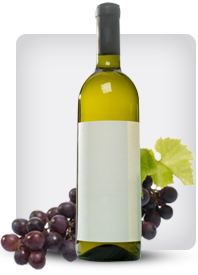
Wine Reviewed Kourtakis Kouros Patras 2008 11.9% alcohol about $ 10 Let’s start by quoting the marketing materials.
“Tasting Note : Straw/lemon yellow color; lanolin, lemon and mineral aroma; crisp apple & lemon flavor; light body; crisp finish. Serving Suggestion : Pasta salad & olive oil dressing; fried seafood” And now for my review.
At the first sips the wine presented refreshing acidity. It was lemony. The initial meal centered on a soy-barbecued chicken breast. The wine showed strong lemon with good acidity. It was tasty. I got the feeling of the Greek seaside. The meal included an old favorite of mine, potatoes roasted in chicken fat. (The Greeks do their roasted potatoes differently.) The wine cut the grease. With a white corn and black bean salsa the wine’s acidity picked up but its fruit descended. With the dessert of fruit juice candy I got the lanolin that I had been promised.
The next meal involved a packaged eggplant rolatini with tomatoes, ricotta and mozzarella cheese that I slathered with grated Parmesan Cheese. This wine presented strong lemon flavor and acidity with a moderate length. Dessert was a high-quality, French lemon pie with a buttery crust. The wine was thin and yet pleasant. The two lemons meshed.
My final meal involved an omelet perked up with garlic powder and crushed chillies. The wine was pleasantly acidic and round with a side of moderately spicy guacamole. The wine became more acidic but remained pleasant and refreshing. This was a summer terrace wine. Before the traditional two cheeses I enjoyed some Matjes herring. The wine became sweet with a delicate lemon flavor. This was a pretty good pairing.
The first cheese was a local Provolone. This relatively flat cheese managed to weaken the wine. With a nutty Swiss, the wine wasn’t very present and not worth wasting on the cheese.
Final verdict. I have no plans to buy this wine again. There is just too much competition out there. But it did come close. Why can’t they do better?
More Malbec Wine Articles
Consider the Wines of Abruzzo For Your Next Wine-Tasting Party
Posted onThe wines of Abruzzo, Italy, can offer more than just wine for your next wine tasting party. By offering your guests a little history on the legendary wine making region of the wines you feature, you provide more than a great tasting wine. You can complement the taste as your guests can picture the vineyards where the wine originated. The Abruzzo region of Italy has a vivid ancient past, both in history and wine making. This article looks at this region, including Scarpone, one of the most prized wineries of the area, providing some information you can share at your next wine tasting party.
Abruzzo
Abruzzo has its fair share of art and architecture throughout its hill towns and mountain villages, but the Apennine mountains dominate the region, taking up two thirds of the area and attracting hikers and skiers to resorts. The vast Parco Nazionale d’Abruzzo is one of Europe’s most important nature preserves.
Descendants of various hill tribes who settled the region in the Bronze Age, the Abruzzesi were difficult to unite, although the Greeks, Romans, Swabians, Aragonese, and Bourbons all tried. Before the advent of modern transportation, the inhabitants were isolated in hill towns and villages clinging to the sides of mountains. After the 12th Century, the Abruzzesi were ruled by a succession of dynasties based in Naples to the south. As a result, their diet, speech, and customs are more similar to their southern neighbors than to their neighbors to the north or west.
The hills in the region are highly favorable for grapevines. The two classified wines are Trebbiano and Montepulciano, not to be confused with the town of that name in Toscana, where Vino Nobile is made. When grown on the lower hills, Montepulciano has an irresistible character, full bodied and smooth with the capacity to age. In the higher areas, the vines produce a lighter version, Ceraruolo, which is a sturdy, cherry-colored rosé. The white Trebbiano d’Abruzzo has been described as a phantom vine since its origins are unclear. At its best, the wine can develop a Burgundy-like complexity after four or five years of aging.
Scarpone
The small estate of Lorenzo Scarpone is located in Abruzzo in the Colline Teramane zone named after the nearby mountain town of Teramo and thought to produce the finest wine in the Abruzzo region from the native Montepulciano grape. It is the first and only zone in the Aburzzo to be given the Italian government’s highest quality ranking of DOCG (Denominazione di Origine Controllata E Garantita).
Owner Lorenzo Scarpone is well known in the United States among Italian wine lovers for his Italian wine import company, Villa Italia, founded in 1989. Villa Italia’s wines have received outstanding reviews from Italy’s leading wine journal Gambero Rosso, wine club associations, and from Wine spectators, Robert Parker and Stephen Tanzer.
Lorenzo, an active member of the Slow Food Organization, founded the first convivium in the United States in San Francisco where he resides with his family. Born and raised in the same area where his wine estate is located, Lorenzo grows only the native Montepulciano grape. Highly respected Loriano di Sabatino is the winemaker and the wines have gained critical acclaim in the short time that the estate has released them.
The fine wines of Scarpone as well as other wineries within the Abruzzo wine making region of Italy are a favorite of many wine club associations as they produce robust wines with grapes possessing a vivid past that is sure to interest and intrigue your guests.
Find More Zinfandel Wine Articles
I Love Italian Regional Cuisine – Pairing Umbria Cuisine With Red Wine
Posted onUmbria lies smack dab in the middle of Italy. Even though it doesn’t border the sea, the Tiber River and Lake Trasimeno provide a fine choice of fish and eels. Local specialties include truffles. You won’t go hungry here.
Lepre alla Cacciatora (Cacciatora Style Hare) is a popular, traditional dish. It calls for white wine, cured ham, capers, and several other ingredients. Enjoy it with a Chianti Classico DOCG or a Vino Nobile di Montepulciano DOCG, both from the neighboring region of Tuscany.
Another hunter’s style dish is Pollo alla Cacciatora (Cacciatora Style Chicken) whose central ingredient is easier to find and prepare. The classic preparation calls for salted anchovies and capers. Suggested wine pairings include Chianti DOC or Chianti Classico DOCG or a Nebbiolo-based wine from Piedmont.
Truffles are really popular in this part of the woods. Enjoy a Spaghetti all Nursina (Spaghetti Norcia Style) in which a local pasta is accompanied by these delicious fungi are heated in olive oil with a touch of anchovy and garlic. Barbaresco DOCG from Piedmont is the recommended food pairing.
Don’t think about the park when you’re enjoying Piccioni allo Spiedo (Pigeons roasted on the spit) with the rest of that Barbaresco, a Barbera d’Alba DOC, a Barbera d’Asti DOC also from Piedmont, or an Italian Pinot Nero.
Agnello arrosto (Roast Baby Lamb) is traditionally roasted in the dying embers that remain after bread is baked in a wood oven. You may have to make amends but this dish can still be excellent. Especially if you accompany it by a Barolo DOCG from Piedmont or a Brunello di Montalcino DOCG from Tuscany.
Our final dish Anitra Selvatica con pappardelle (Wild Duck with Broad Noodles) highlights what is perhaps the region’s finest red wine, Montefalco Sagrantino DOCG. You may have to substitute a farm-raised duck for the wild duck, other pasta for the Pappardelle, regular ham for the prosciutto, and other wine for this pricey suggestion. It won’t be the same.
I Love Italian Regional Cuisine – Pairing Apulia Cuisine With Red Wine
Posted onApulia is the heel of the Italian boot. It is located in the southeast corner of Italy on the Adriatic and Ionian Seas. As many other regions of Italy, over the centuries Apulia was constantly invaded. The region’s difficult history has given it a varied cuisine that should meet your fancy. Apulia is known as the Italian granary and the vegetable garden of Italy. Believe it or not, some of the local olive trees are said to be one thousand years old, and still produce great olives. Is it any wonder that so many traditional recipes call for olives or olive oil?
For starters or as a light main dish, try Melanzane Ripiene (Stuffed Eggplant) baked eggplant that has been hollowed out and stuffed with a mixture of its chopped pulp, anchovies, breadcrumbs, capers, olives, and tomatoes. Enjoy this delicacy with a Monica di Sardegna DOC from Sardinia or a Cerasuolo di Vittoria DOCG from Sicily.
Another good starter or light main dish is Lasagnette con Acciughe (Lasagnette with Anchovies). Lasagnette are flat noodles cut from a lasagna sheet. Cook them with salted anchovies, garlic, breadcrumbs, salt, extra virgin olive oil, crushed chili peppers, scallions, ricotta cheese, aged pecorino cheese, and several other ingredients. The recommended wine pairing is a local Primitivo. This is not the place to debate whether or not California Zinfandel is a direct descendant of the Apulia Primitivo grape. And this dish is not made for Zinfandel.
If you like lamb try Agnello al Cartoccio (Lamb Chops in Foil) which are baked in foil or paper with olives and lampasciuoli, wild bitter onions from the mountains of Apulia. Needless to say, look for substitutes at the farmer’s market. Enjoy this dish with a Brunello di Montalcino DOCG from Tuscany, a Barolo DOCG from Piedmont, or a Torgiano Rosso Riserva DOCG from Umbria.
Involtini di Manzo (Braised Beef Rolls) are made from thin slices of boneless ground round that are pounded, and then rolled around a mixture of Italian bacon (pancetta), red wine, olive oil, and several other ingredients. Wine pairing suggestions include Aglianico del Taburno DOC from the neighboring region of Campania, Rosso di Montalcino DOC from Tuscany, or Barbera d’Asti DOC from Piedmont.
More Red Wine Articles
Whether Wine Cellar or Wine Racks, What Are Your Wine Storage Needs?
Posted onProper wine storage is the best way to protect your quality wines so that they last for a long time. Wine storage provides the perfect temperatures and maximum storage space so that you can find the wines you want easily and quickly. There are many specialty companies that create storage units in a variety of options. Wood and metal racks are available as well as cooling units, cabinets and fridges. Some are elegant and some are simple, and they come in different shapes and sizes to meet your needs. Your choice will depend on your taste, supply and budget. The most popular choices include racks, cabinets, table top units and rack cubes.
Wine Racks
Racks come in wood and metal. They are also available for commercial businesses. This is the easiest solution if a person has a small supply of bottles. With regards to the wood racks, there are usually a few different shades to choose from. They also come in many different sizes and shapes. There are table top racks, scalloped racks, display top racks and other styles for wood racks. They are perfect for the decoration of any elegant room. They are elegant and beautiful additions to any collection. If you are not interested in wooden wine racks, then you can choose a metal base. Metal racks come in 36” or 48” sizes. They are also available for decorative bottlers or larger bottles. There are also floor to ceiling frames that can add character to any room. Finally, commercial racks are larger and come in wood or metal, allowing companies to choose which option best suites their place of business.
Wine Cabinets
Cabinets offer elegance and safe storage for your wine collection. They are a great addition to any living or dining room. There are also built in cooling systems to protect your supply. Cabinets are usually made out of high quality oak but can come in different shades. They come in 220, 330 or 440 bottle storage sizes. Some companies may also have a credenza cabinet with a 216 bottle storage and cooling system. Depending on the company, it might be possible to customize your own style and color to match your home. The cooling units have temperature adjustments and professionally designed storage to protect your investment. They may be considered storage space, but these beautifully handcrafted cabinets are made so that you and your guests will be amazed.
Table Top Units
Table top units come in different shades of wood. They store anywhere from 24 to 48 bottles safely in a limited space. This option is for people who want to store a limited supply in a small space. The wines can be displayed for guests to see, giving them a variety of options to choose from. Pine and redwood are the most popular wood finishes, and they can complement any home. They are also affordable, practical, sturdy and attractive additions to any kitchen, living or dining room.
Wine Rack Cubes
Rack cubes are modern and easy storage units for about 24 bottles. They are designed to save space and create a neat look whether in a wine cellar or dining room area. Cubes come in many different sizes and a few wood colors. Two shades of pine and two shades or redwood are available for buyers to choose from. Sometimes two rack cubes can be purchased to be placed side by side or on top of each other. If your selection is larger, then four can be bought to create a large storage cube. There are also bins to store cases and other items and supplies. These may be placed in a wine cellar for storage and organization.
WineRacksAmerica has many different options for your wine storage needs. They range in color, size and style. Check out their inventory to find the perfect storage system that meets your taste, budget and supply.
Featured wine
popular posts
-

Why Zinfandel is Uniquely American In the sprawling narrative of wine, most noble grape varieties carry passports from the Old World
8-25 2026Cabernet Sauvignon is French, Riesling is German, and Sangiovese is Italian. Yet, one grape—vibrant, bold, and unapologetically fruit-forward—has staked a claim as the quintessential Read More
-
The Rise of a Distinctive Terroir
8-24 2026Rise of a Distinctive Terroir** In the rolling hills of California’s Central Coast, Paso Robles has emerged as one of the most compelling wine Read More