
By [Your Name]
Posted on by Rickiects on Merlot Grapes
By [Your Name]
—
Introduction
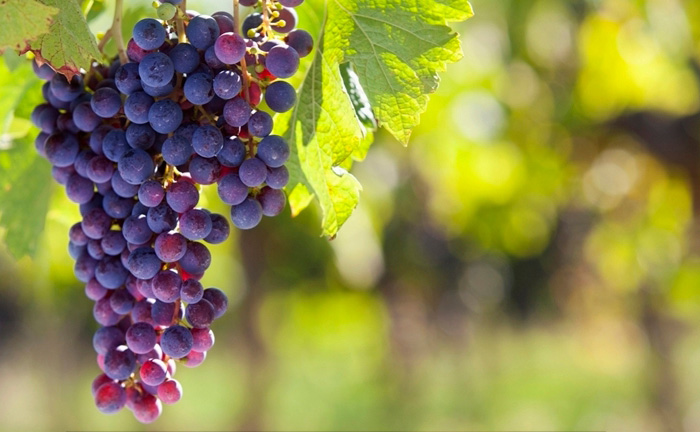
Merlot, one of the world’s most beloved red wine grape varieties, thrives in moderate climates where cool nights and warm, sunny days allow for slow, even ripening. For centuries, regions such as Bordeaux, Tuscany, and Washington State have produced elegant, fruit-forward Merlots that balance acidity, tannin, and alcohol. However, the accelerating pace of climate change is rewriting the rules of viticulture. Rising temperatures, altered precipitation patterns, and increased weather extremes are having profound—and often disruptive—effects on Merlot’s growth cycle, flavor profile, and global viability.
This article examines the scientific and practical impacts of climate change on Merlot grapes, explores adaptation strategies being adopted by growers, and considers what the future may hold for this iconic varietal.
—
1. Shifts in Phenology: Earlier Budbreak and Harvest
One of the most documented effects of climate change on grapevines is the advancement of phenological stages. For Merlot, which is an early-ripening variety, this is particularly pronounced.
Warmer winters and springs cause buds to break earlier. In Bordeaux, budbreak now occurs, on average, 10–15 days earlier than in the 1980s.
Early flowering exposes delicate flowers to a higher risk of spring frosts. A late frost after budbreak can devastate yields, as seen in 2017 and 2021 in France.
Veraison (the onset of ripening) and harvest are now occurring up to three weeks earlier in many regions. While earlier harvests can help avoid autumn rains, they also mean grapes develop during the hottest part of the summer, affecting sugar and acid balance.
Consequence: The compressed growing season reduces the window for flavor complexity development, often leading to wines with higher alcohol and lower natural acidity.
—
2. Sugar Accumulation vs. Phenolic Ripening: A Growing Mismatch
Merlot’s quality depends on the synchrony between sugar accumulation (which drives alcohol) and phenolic ripening (which drives color, tannin, and aroma). Heat accelerates sugar production through photosynthesis, but it can outpace the slower process of phenolic maturation.
Grapes picked at elevated sugar levels produce wines with alcohol content often exceeding 15% ABV, compared to the 12.5–13.5% typical of classic Bordeaux Merlot.
When growers delay harvest to achieve phenolic ripeness, they risk over-ripening sugars. Conversely, picking early to control alcohol yields astringent, green tannins.
High temperatures increase respiration of malic acid, leading to flabby, low-acid wines that lack freshness and age-worthiness.
This mismatch is arguably the single greatest quality challenge facing Merlot producers today.
—
3. Heatwaves and Sunburn: Direct Physical Damage
Extreme heat events—now more frequent and intense—pose immediate threats to the vine itself.
Prolonged exposure to temperatures above 35°C (95°F) causes sunburn on berries, leading to scalded skins, raisining, and off-flavors.
At temperatures above 40°C, stomata close and photosynthesis ceases, halting sugar and anthocyanin production.
Repeated heatwaves weaken vines, making them more susceptible to disease and reducing their lifespan.
In regions like California’s Central Valley and Australia’s Riverland, Merlot growers report increasing crop losses due to heat damage.
—
4. Water Stress and Drought
Merlot is moderately drought-tolerant but highly sensitive to water stress during flowering and berry development. Climate models predict more frequent and severe droughts in many wine regions.
Mild water stress can concentrate flavors, but severe stress shrinks berries and reduces juice yield.
Under extreme water deficit, vines may drop leaves or berries, halting ripening entirely.
In traditionally rain-fed regions (e.g., Bordeaux), growers are increasingly investing in irrigation—a costly and sometimes legally restricted adaptation.
Conversely, when heavy rains do arrive, they often come as intense downpours, causing flooding, erosion, and increased fungal pressure.
—
5. Increased Disease and Pest Pressure
Warmer, wetter conditions create a favorable environment for pathogens that previously posed less risk to Merlot.
Higher humidity and temperature accelerate fungal growth, requiring more frequent fungicide applications.
Unseasonably warm and wet autumns promote bunch rot, particularly damaging to thin-skinned Merlot.
Insect vectors, such as the spotted lanternfly and various leafhoppers, are expanding their ranges northward, introducing new viral diseases.
Organic and biodynamic producers face particular challenges, as their disease management options are limited.
—
6. Regional Shifts and the Search for Cooler Terroirs
As traditional regions become marginal, growers are exploring new frontiers.
Vineyards are being planted at higher elevations (e.g., in Argentina’s Uco Valley and Italy’s Alpine foothills) to exploit cooler nighttime temperatures.
Cool-climate regions like England, Patagonia, and Tasmania are now producing credible Merlot, though yields remain low.
Fog and ocean breezes—such as in Chile’s Casablanca Valley or California’s Sonoma Coast—offer natural temperature moderation.
However, these shifts are not without risk: newer regions often lack the deep soils and established vineyard practices of classic areas.
—
7. Adaptation Strategies for Growers
Proactive viticultural and oenological measures are being implemented worldwide:
Leaf thinning and shoot positioning to shade fruit while maintaining airflow.
Choosing drought-resistant and heat-tolerant rootstocks (e.g., 1103 Paulsen, 140 Ruggeri).
High-wire and VSP systems that reduce sun exposure and improve ventilation.
Night harvesting to preserve acidity and reduce field heat.
Use of acidification, reverse osmosis for alcohol reduction, and extended maceration to soften tannins.
—
8. The Future of Merlot: Adaptation or Decline?
The outlook for Merlot is mixed. In the short term, many prestigious estates—especially in Bordeaux—are adopting rigorous adaptation strategies that maintain quality. Yet, some are also pulling up Merlot in favor of sturdier varieties like Cabernet Sauvignon, Syrah, or even heat-tolerant hybrids.
The International Organisation of Vine and Wine (OIV) projects that by 2050, many current Merlot regions will become unsuitable for quality production without significant intervention. Conversely, emerging cool-climate regions may rise as new benchmarks.
—
Conclusion
Climate change is not a distant threat for Merlot—it is an active, measurable force reshaping every stage of the vine’s life. From earlier harvests to higher alcohol, from sunburned berries to shifting terroirs, the effects are both subtle and profound. The wine industry’s response—combining traditional knowledge with cutting-edge science—will determine whether Merlot remains a global icon or becomes a relic of a cooler era.
For lovers of this supple, plum-driven varietal, the message is clear: the glass you raise today may taste different tomorrow, and the vineyard that produced it may not be the same one that grows it a decade from now. Adaptation is not just a strategy; it is the new essence of winemaking.
—
*References:*
– Jones, G.V., et al. (2005). “Climate Change and Global Wine Quality.” *Climatic Change*.
– van Leeuwen, C., & Darriet, P. (2016). “The Impact of Climate Change on Viticulture and Wine Quality.” *Journal of Wine Economics*.
– OIV. (2021). “Impact of Climate Change on the World’s Vineyards.”
– Schultz, H.R. (2000). “Climate Change and Viticulture: A European Perspective.” *Australian Journal of Grape and Wine Research*.
—
*This article is intended for informational purposes and reflects current scientific consensus as of 2025.*
Tags: name
Copyright © 2026 Top Red Wine All rights reserved. .